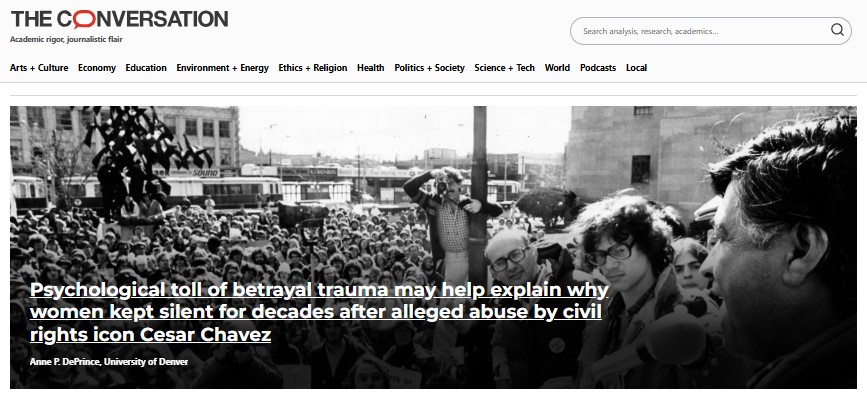
Survivors don’t owe anyone their stories. Yet, when women do decide to share their stories years later, the delay can be used to sow doubt — to wonder why it took so long to for them to disclose what happened. Research on betrayal trauma can help people understand silence. And research on institutional courage canContinue reading “Making Sense of Silence after Abuse: Understanding Research on Betrayal Trauma”
Tag Archives: survivor
Changing the Conversation in the Wake of the Epstein Files: #Iwas15

All too often, conversations about intimate violence — from child abuse to sexual assault — find their way to some version of victim blame and disbelief. It turns out that blame and disbelief are linked with myths and misperceptions about intimate violence. That means that there’s a role for researchers and practitioners to play inContinue reading “Changing the Conversation in the Wake of the Epstein Files: #Iwas15”
Survivor-Centered Care: New Research on the Horizon

by Amber Fredrick, TSS Group Member, 2nd Year Graduate Student In my time as an advocate, I have spent many long nights in emergency rooms and early mornings in court rooms working with survivors to get the care they need. In navigating these complicated systems that often leave survivors feeling confused, overwhelmed, and frustrated, IContinue reading “Survivor-Centered Care: New Research on the Horizon”
New Op-Ed: What the #metoo Epidemic Means for #couldbemetoo
Recently released national research showed that one in sixteen adolescent girl’s first sexual experience is rape. In a new Denver Post Guest Commentary, Anne DePrince talks about the messages conveyed when violence is so common. And the messages we need to send instead.
 Trauma Research Notes