
The first week of August brought thousands of psychologists to downtown Denver for the American Psychology Association (APA) annual convention. Across poster sessions, three current TSS Group Team Members Amber Fredrick, Courtney McCrimmon, and Leah Waltrip shared some of our work with colleagues. And now we’re excited to share those posters and that work with you!
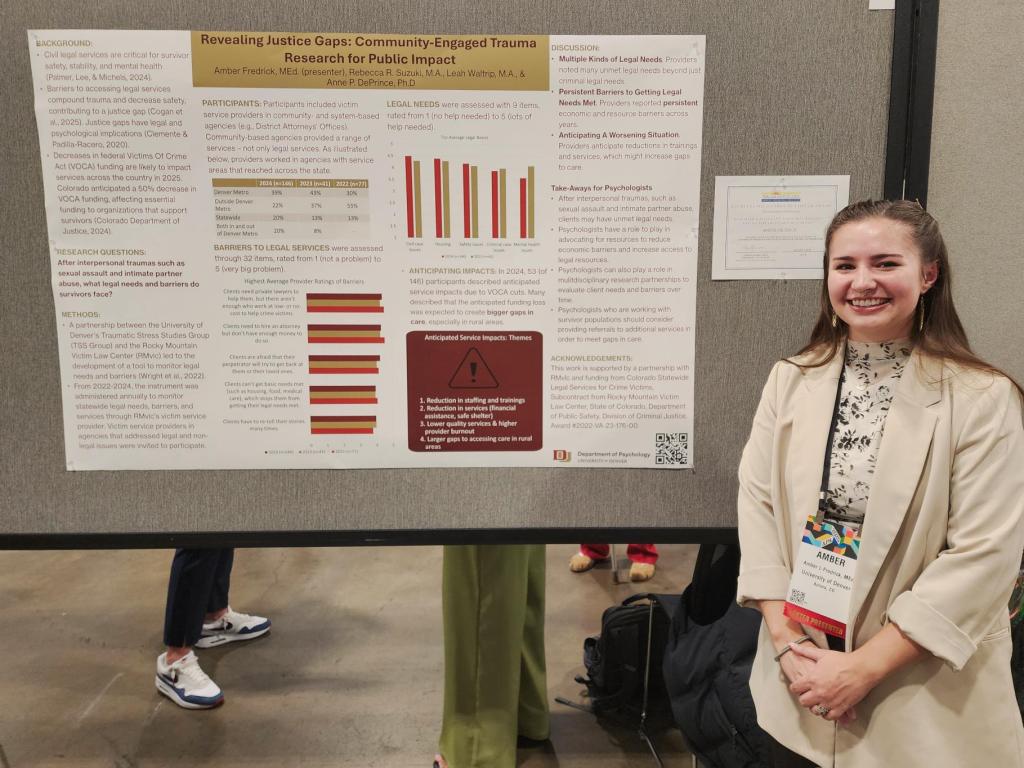
Revealing Justice Gaps
Drawing on data from a partnership with the Rocky Mountain Victim Law Center (RMvlc), Amber Fredrick led a poster describing on the legal needs and barriers facing survivors across Colorado as reported by victim service providers annually (2022 to 2024). In 2024, providers also shared the impacts that they were anticipating from impending VOCA funding cuts. As the poster (below) summarized, all three years of data show persistent economic and resource-related barriers to care as well as many unmet legal needs. Further, providers in 2024 anticipated a worsening situation with forthcoming VOCA cuts. The poster featured take-aways for psychologists.
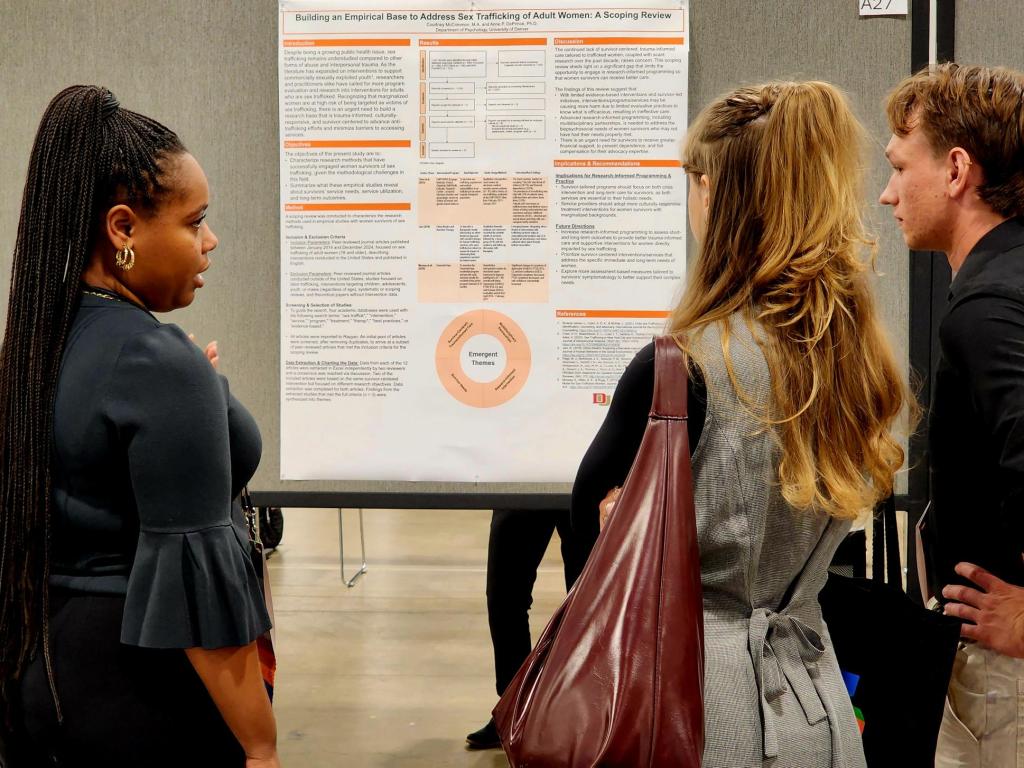
Building an Empirical Base to Address Sex Trafficking
To get a snapshot of the evidence base for working with women who have been sex trafficked, Courtney McCrimmon led a scoping review. Scoping reviews offer a systematic way to identify articles and make sense of a literature. Focused on the last decade of research, this scoping review screen more than 1200 articles to identify empirical research with adult women who had been trafficked. The review identified only three articles that met the scoping review criteria. Across that handful of studies, several themes emerged pointing to the importance of (1) survivor-centered, trauma-informed care, (2) multidisciplinary partnerships, (3) survivors’ needs, and (4) research-informed intervention.
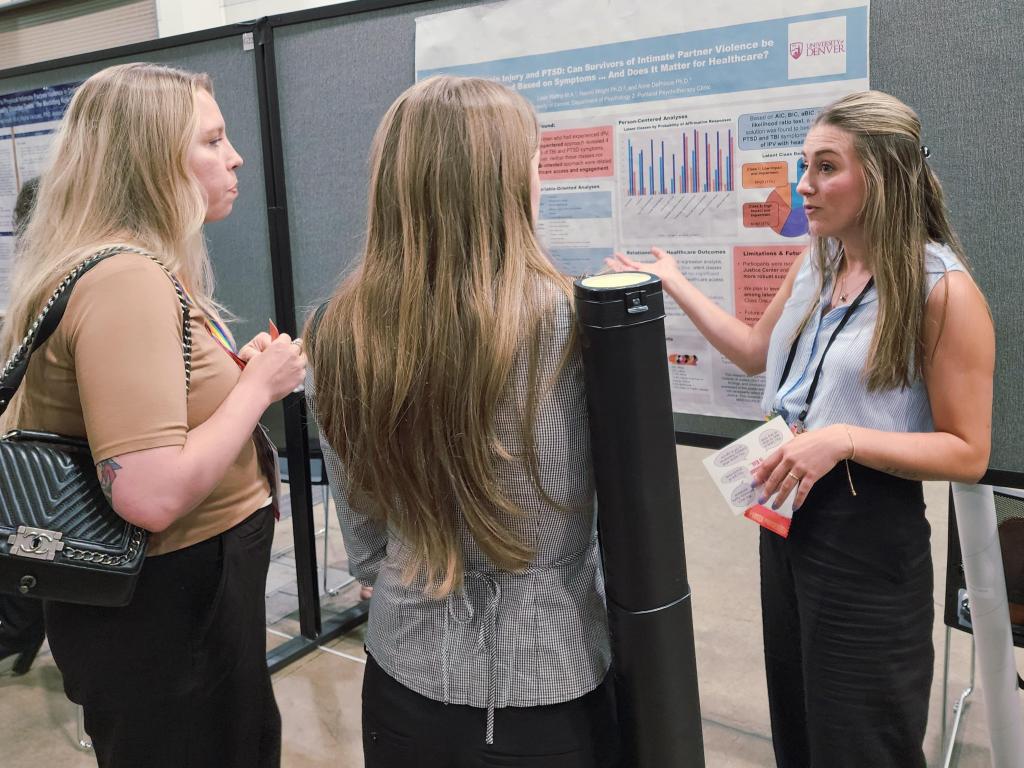
Brain Injury and PTSD
Drawing on two studies with survivors of intimate partner violence, Leah Waltrip led a poster describing women’s experiences with head injuries, symptoms of post-traumatic stress disorder (PTSD), and healthcare. Exploring two different analytic approaches, the study tested whether patterns of brain injury and PTSD symptoms were linked to things like trust in doctors, understanding health information, or getting medical care when it’s needed. This led to discovering four distinct patterns of symptoms, though these patterns weren’t linked to differences in healthcare access or engagement.
Thank you to all who made this work possible – from Colorado and DU collaborators to survivors and funders. We are grateful to APA – particularly Division 56 (Trauma Psychology) – for the opportunity to share our work. And congratulations to Amber, who received the Division 56 award for best poster!
 Trauma Research Notes